
UPM Program 2024
The 2024 program was structured around four key focus areas: Freeform Optics in ground-based astronomy, Freeform Optics in Space Applications, Freeform Systems and Applications, and Manufacturing and Characterization of Freeform Surfaces. Together, these tracks outlined the full arc from application-driven requirements to system design, fabrication workflows, and metrology of freeform optics.
Exhibitors (Booth set up)
Registration & Welcome snack
Welcome note
Anke Siegmeier ·
OptoNet, Germany·
Freeform Optics: From Design to Systems
KEYNOTE Tolerancing of Optical Systems with Real Freeform Surfaces
Herbert Gross ·
Fraunhofer IOF, Jena, Germany·
KEYNOTE Centration and alignment considerations for aspheres and freeforms
Jessica DeGroote Nelson ·
Edmund Optics, Barrington, USA·
KEYNOTE Freeform Surfaces in Spectrometer Systems
Thomas Peschel ·
Fraunhofer IOF, Jena, Germany·
Exhibitor Session I
#1 Moore Nanotechnology Systems LLC · Christopher Morgan
#2 Schneider GmbH & Co. KG · Nikolaj Priebe
#3 asphericon GmbH · Ulrike Fuchs
#4 Dutch United Instruments · Jing Zou
#5 DIOPTIC GmbH · Holger Sommer
#6 AMETEK Precitech Inc. · Jeff Roblee
Exhibition & Coffee Break
Freeform Optics in ground-based astronomy
KEYNOTE The Extremely Large Telescope – the worlds biggest eye on the sky – sharper views of cosmic objects than ever before
Florian Kerber ·
European Southern Observatory, Garching, Germany·
KEYNOTE Development of Optical Systems for the Cold Optic Instrument of MICADO
Jan Kinast ·
Fraunhofer IOF, Jena, Germany·
KEYNOTE The METIS IMAGER: from optical design to final opto-mechanical design and manufacturing
María Concepción Cárdenas Vázquez ·
Max-Planck-Institut für Astronomie, Heidelberg, Germany·
Exhibition & Coffee Break
Evening event
The evening event was kindly supported by Zeiss and Qioptiq.

Registration
Freeform Optics in Space Applications
KEYNOTE Extreme Space Telescope Design, Fabrication, and Testing
Kim Daewook ·
University of Arizona, USA·
KEYNOTE Ultra Precise Manufacturing of Mirrors for Space Instruments
Bart van Venrooy ·
TNO, Delft, The Netherlands·
KEYNOTE Small Sat Applications using Free Form Mirrors
Sebastian Fray ·
OHB System AG, Bremen, Germany·
Exhibition & Coffee Break
Exhibitor Session II
#1 Innolite GmbH · Christian Wenzel
#2 Bühler Alzenau GmbH · Christian Schindler
#3 Micro-LAM · Raitis Mednis
#4 OptoTech Optikmaschinen GmbH · Matthias Pfaff
#5 Panasonic Connect Europe GmbH · Reinhard Windemuth
Exhibition & Lunch Break
Freeform Optics: Manufacturing and Characterization
KEYNOTE Development Challenges of Ion Beam Figuring
Lynn Allen ·
Arling Consulting, Fairport, NY USA·
KEYNOTE Manufacturing and characterization of an elliptical EUV collector mirror for high-power EUV LPP sources
Torsten Feigl ·
optiX fab GmbH, Jena, Germany·
Wrap up and Closure
Anke Siegmeier ·
OptoNet, Germany·
Exhibition & Snacks & Coffee
Keynotes

Democratization of Laser Technology:
A Journey of Unlimited Opportunities.
Dr. Ulrike Fuchs Asphericon
A Journey of Unlimited Opportunities.
Dr. Ulrike Fuchs Asphericon
A paradigm shift is underway in laser technology, marked by the democratization of light. This shift aims to empower individuals beyond expert circles, offering the capability to shape and utilize light according to unique requirements. The talk delves into the evolution of laser technology, emphasizing its transformation from a specialized field to a ubiquitous tool across various industries, particularly in laser cutting, welding, and surface structuring. Central to this evolution is the concept of democratization, which hinges on enhancing accessibility through simplicity, adaptability, and performance.
Laser applications for sustainable electrical energy storage and converters
Dr. Jens Standfuß Fraunhofer IWS
Dr. Jens Standfuß Fraunhofer IWS
Laser applications play a crucial role in optimizing and advancing technologies that are of great importance for a sustainable energy future. The presentation describes the use of laser applications in batteries, fuel cells, transformers, and electric motors with a focus on material properties.
In the field of battery technology, lasers enable precise machining of electrode materials to improve performance and capacity. This contributes to the development of efficient energy storage solutions that are essential for expanding renewable energy and electrifying the transportation sector. In fuel cells, laser applications allow for precise machining of membranes and electrodes to increase efficiency and durability. This supports the realization of clean and emission-free energy systems, providing an alternative solution to conventional power generation. Laser applications are also used in transformers and electric motors to reduce electrical losses, improving performance and efficiency. This supports the development of energy-efficient systems. Through further development and application of laser applications, the next generations of batteries, fuel cells, transformers, and electric motors can be designed, making a significant contribution to addressing the challenges of climate change and resource scarcity.
Laser Industry from Lithuania
Kristina Ananiciene Lithuanian Laser Association
Kristina Ananiciene Lithuanian Laser Association
The laser industry in Lithuania has rapidly evolved into a key player in the global photonics market. This sector showcases notable strengths in optics, ultrafast lasers, and laser systems integration. Collaborative efforts between academia, research institutes, and industry have driven significant advancements in laser-based manufacturing, scientific and medical applications, semicon, defense and more. Despite challenges, ongoing strategic initiatives aim to sustain Lithuania’s competitive edge and foster continued innovation within the laser industry.
TRUMPF Laser Amplifier -
The high power laser source for EUV lithography
Dr. Michael Kösters TRUMPF
The high power laser source for EUV lithography
Dr. Michael Kösters TRUMPF
EUV lithography is the most advanced lithography technique used in the semiconductor industry allowing mass production of high performance microchips with low energy consumption. The light source behind this technology is a laser-produced plasma (LPP): the TRUMPF Laser Amplifier, an extremely powerful laser with an average power of 30 kW at roughly 100 ns pulse length, shoots at small metal droplets at a rate of 50 kHz converting the droplets into a highly-energetic plasma, which emits light at 13.5 nm wavelength. This extreme ultraviolet light (EUV light) is used to image the chip mask onto the waver with features as small as a few nanometers. In this talk, we give insights into which extremely challenging requirements we are facing in this application and how the TRUMPF laser amplifier is capable of fulfilling them.

Industrialization of Additive Manufacturing (AM)
Prof. Ingomar Kelbassa Fraunhofer IAPT
Prof. Ingomar Kelbassa Fraunhofer IAPT
The presentation will be addressing all aspects in terms of Industrialization of AM along the AM manufacturing route – from Design to the finished part, end2end. Special foci will be spent on virtualization, new process approaches, finish machining and quality assurance. Success stories from industry – machine OEMs as well as end users – will be completing the presentation.
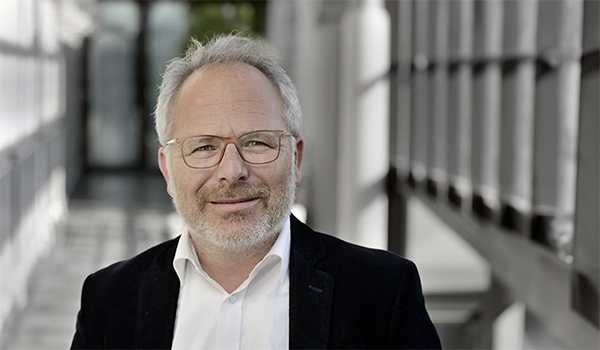
Laser Inertial Fusion – Critical Advancement for Germany’s Optics and Laser Sectors
Dr. Jochen Stollenwerk Fraunhofer ILT
Dr. Jochen Stollenwerk Fraunhofer ILT
With the world’s first time ever ignition of a burning plasma through inertial confinement of a dense plasma, fusion energy has garnered global attention. Plasma confinement and ignition were driven by the world’s largest and most energetic laser in this experiment: the National Ignition Facility in the United States.
Germany, recognized for its leadership in basic research on magnetic fusion plasmas, has not been particularly active in ICF fusion research over the past two decades. However, the German photonics and engineering sectors have played a significant role in providing key components for high energy lasers, and provided materials, targets, precision instrumentation, electronics, and optical technologies to leading fusion experiments worldwide. Furthermore, German research institutions maintain a high level of expertise in essential technologies for laser fusion, as well as in shared technologies between magnetic fusion energy (MFE) and inertial fusion energy (IFE), such as research in fuel cycle or reactor materials.
Germany is strategically prioritizing the long-term adoption of fusion technology, given the robust foundation of this technology. This initiative is positioned alongside other renewable energy sources like solar and wind. The focus on fusion technology highlights the necessity for continuous research and development in these critical technological areas to maintain and advance Germany’s leadership in high-tech technologies and the energy sector.
This presentation will provide an introduction to Laser Inertial Fusion Energy, offer insights into current research from an international and specifically German viewpoint, and identify opportunities within the laser and optics industry.